Manham
The Chemistry of DeathManham is a small, isolated Norfolk village whose apparent self-containment becomes increasingly fragile as murder, a disappearance, and public suspicion reshape its communal life. First encountered by David Hunter as a rain-dark settlement at the edge of the marshes, it becomes both his home and the setting in which the threat is revealed to be rooted within the community itself.
Setting and first impressions
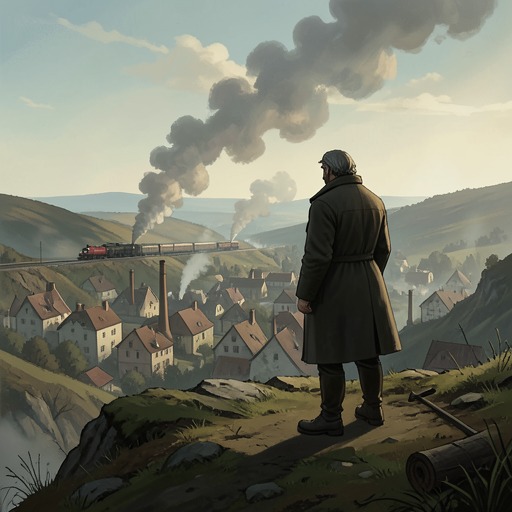
David arrives in Manham on a wet March afternoon, three years before the events surrounding the discovery in Farnham Wood. The station is little more than a platform in a remote landscape of flat marshland and fens, broken by patches of bare woodland. With no transport arranged and no taxi rank or phone box, he sets off on foot, following a road sign that points uncertainly towards the village. His arrival makes Manham feel distant not only from London but from the ordinary conveniences he had taken for granted.
The village emerges gradually at the end of his walk. Isolated farms give way to a church tower glimpsed beyond a bend, then to houses that remain partly concealed until the road opens onto the settlement. Manham is not a postcard village: pre-war houses at its outskirts give way to flint-built cottages, which grow older towards the centre. Closed shops, a school, a pub, and the village green form part of its everyday fabric. Daffodils brighten the green beneath a large horse chestnut; behind them stands the Norman church, enclosed by a graveyard of leaning, moss-covered stones. Its flint walls have endured, while the mortar, windows, and doorway show the effects of age and shifting ground.
The landscape is open, but the village itself can seem withdrawn. Its houses gather close together, and its history is visible in weathered buildings and an old church; at the same time, the walk in from the station makes clear how exposed and remote the settlement is. That contrast gives Manham its double character: a place with a strong local identity, set within countryside that offers little shelter or easy connection to elsewhere.
A community under pressure
Manham’s isolation also informs the demands of ordinary life. When Sam and Neil Yates return from Farnham Wood after seeing a dead body, their mother, Linda Yates, calls David, who attends even though it is Sunday. In a small and isolated place, there is no meaningful off-duty boundary for the village doctor. He stays with the family while they wait for the police, giving Sam a mild sedative and hearing the boys’ uncertain account. The village’s remoteness makes local relationships and services immediate necessities.
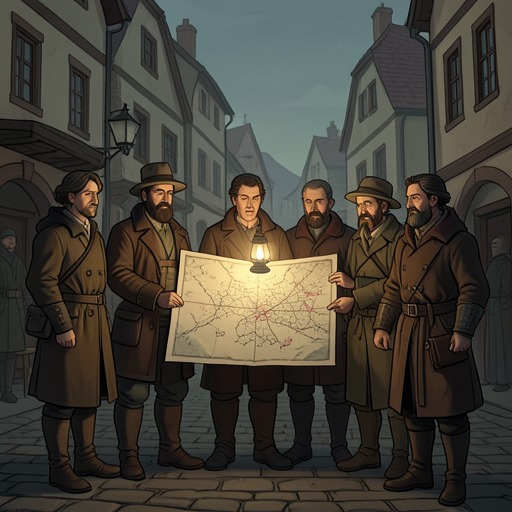
When Lyn Metcalf disappears after the murder of Sally Palmer, a large part of Manham turns out to search. The police concentrate on the woods and the area where Lyn had been running, while residents who are fit and able join the effort. The search briefly produces a sense of shared resolve, but the circumstances prevent it from being uncomplicated. Because two women connected to the village have been attacked, the possibility that the person responsible is local becomes difficult to dismiss. The search thus brings neighbours together physically even as the prospect of a familiar perpetrator begins to distance them from one another.
This suspicion has consequences beyond the investigation. James Nolan, already isolated by local stigma and rumour, becomes another casualty of the hostility that takes hold. After Lyn’s body is found, residents react against the press, whose attention makes Manham a spectacle: equipment is damaged or stolen, and a reporter is injured by a thrown stone. The outward anger at outsiders does not resolve the deeper crisis. Old rivalries acquire new intensity; a dispute over barbecue smoke leads to a fight between members of two families, a neighbour walking a dog is mistaken for a stalker, and bricks are thrown through two houses. The violence and distrust extend into ordinary encounters, making the village’s familiar routines feel newly uncertain.
Places and public life
The village’s public spaces become points of contact between everyday life and the investigation. The Lamb and the village square remain active while police work continues nearby. At the Martyr’s Stone, garlands have begun to wilt; David notices them as he drives past the police trailer on his way to meet the village’s growing unease. The image belongs to the ordinary landscape of Manham, but its placement beside the investigation gives it an ominous association without establishing it as a supernatural sign.
The church and graveyard also stand within the village’s changing public life. Reverend Scarsdale appears in the graveyard speaking with Tom Mason, while journalists and police gather in the village around the case. As other residents avoid the media, Scarsdale addresses reporters and becomes a forceful public voice, condemning police failure, what he describes as moral complacency, and the press’s exploitation of tragedy. Manham’s familiar institutions—the church, pub, green, and village hall—are not separate from the crisis. They are the settings in which communal authority, anxiety, and public attention become visible.
The surrounding properties mark differences within the local landscape. The Brenner house lies about a mile outside the village, down a rough dirt track, amid fields that had once been drained farmland and were returning to the wild. The dilapidated building, its accumulated extensions, and the debris around it contrast with the village’s historic centre. Its position makes clear that Manham’s social world reaches beyond its clustered streets into outlying homes and countryside, where local knowledge and suspicion also matter.
From belonging to departure
The murders change what Manham means to its inhabitants. Sally Palmer had been regarded as an outsider, but Lyn was born in the village, went to school there, and married in its church. Her death makes it harder for residents to imagine that danger belongs somewhere beyond their own community. The village’s attention shifts from the fate of a newcomer to the loss of one of its own, and the press’s arrival turns that local grief into a public spectacle.
Manham’s long habit of relying on itself, once a source of cohesion, becomes a liability when residents can no longer trust one another. Suspicion is described as spreading through the community, while Scarsdale’s prominence gives collective anger an increasingly public expression. The village is not simply a peaceful rural refuge disrupted by an external threat: the danger and its aftermath expose divisions and prejudices already present among its people.
David’s own connection to Manham ultimately proves temporary. After the events at Bank House, he does not return to work at the surgery. He arranges for a locum while patients either wait for a permanent replacement or register with other practices, and he recognizes that his former patients still regard him with reserve. He concludes that he does not belong in the village and puts his house on the market. Manham had offered him distance from London and a place to begin again; after the investigation, its closeness and mistrust make that beginning impossible to sustain.